

Market Aligned and Bipartisan



A Workforce With No On-Ramp
Recent findings from Microsoft highlight a growing divide in how countries and workers experience AI. As automation spreads unevenly, job security is becoming less predictable, especially for younger workers entering the workforce.

The College-to-Office Path Is Breaking
According to the CEO of the world’s largest recruiting firm, the traditional path from college to an office job is no longer reliable. Automation and AI are reducing entry-level roles and forcing younger workers to reconsider career paths.

Entry-Level Jobs Are Disappearing
Experts warn that AI is increasingly replacing entry-level tasks, reducing opportunities for recent graduates to gain early career experience. The trend raises concerns about how young workers enter the workforce.

AI Pioneer Warns Job Replacement May Accelerate
A leading AI researcher warns that job replacement could accelerate rapidly as AI systems become more capable. The warning spans industries from customer service to software development.

AI Is Slowing Hiring for Young Workers
A study from the Federal Reserve Bank of New York found that while companies adopting AI often retrain existing workers, many are hiring fewer new employees. The slowdown is especially pronounced for younger and college-educated workers.

Cost-of-Living Anxiety in the U.S.
New polling from CBS News shows rising cost-of-living concerns across the country. These pressures form the backdrop for how families may experience AI-driven changes to employment and income.

MIT Finds AI Can Replace Nearly 12% of U.S. Jobs
Researchers at MIT and Oak Ridge National Laboratory estimate that current AI capabilities could already perform work equivalent to nearly 12 percent of U.S. jobs, representing approximately $1.2 trillion in wages across multiple sectors.

The Politics of AI Are About to Explode
In a podcast discussion, journalists examine how political leaders are struggling to keep pace with AI’s rapid impact on jobs and the economy. The conversation explores workforce displacement, policy lag, and early discussions around universal basic income.

Congress Responds to AI-Driven Job Loss
A bipartisan Senate bill known as the AI-Related Job Impacts Clarity Act would require companies and federal agencies to report how AI affects employment, including layoffs, hiring, automation, and retraining. The proposal reflects rising concern among lawmakers about AI’s workforce impact.

Economic Growth No Longer Equals Job Growth
A widely shared chart from AI researchers shows a growing divide between economic growth and employment. While corporate profits and productivity continue to rise, job openings across multiple sectors are declining, highlighting a structural shift in how growth occurs in an AI-driven economy.
Amazon’s Massive Automation Strategy
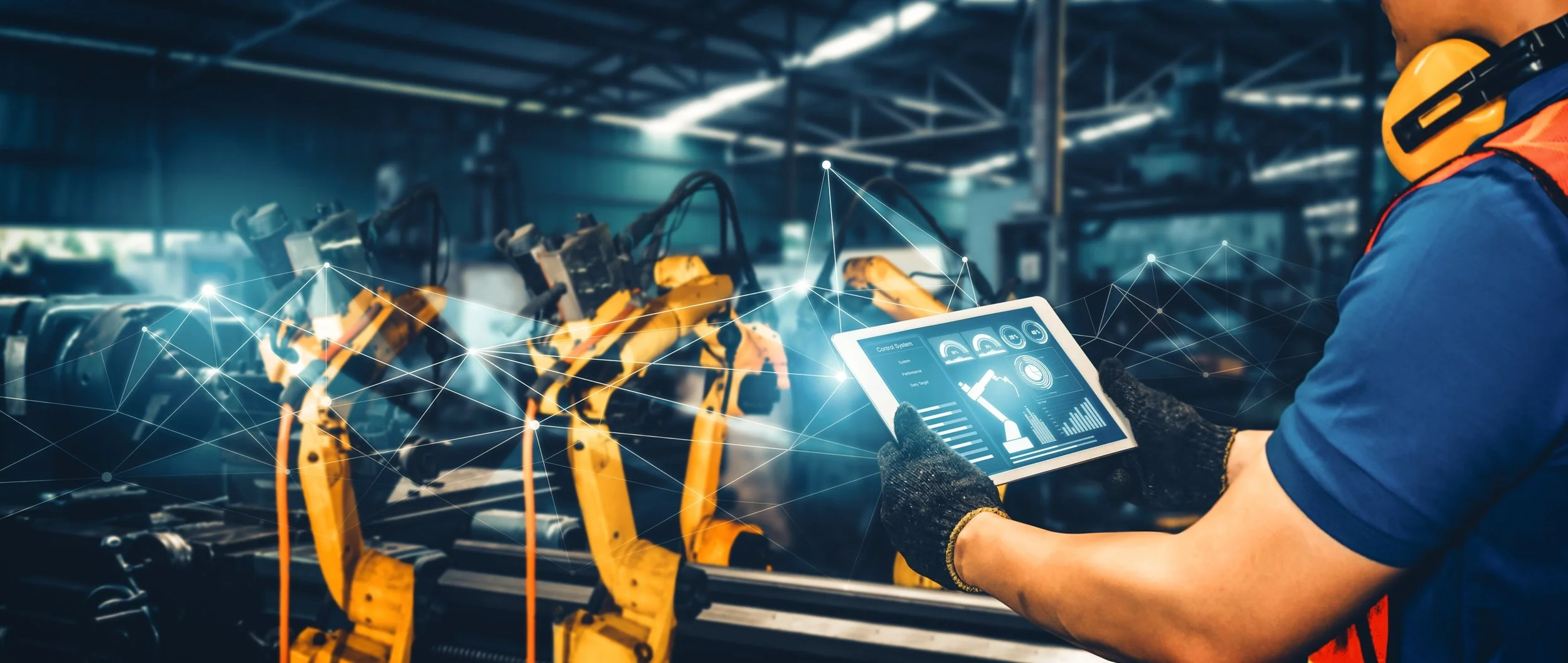
Amazon, one of the largest employers in the United States, is expanding automation across warehouses and logistics operations. Public reporting shows the company plans to replace more than 500,000 frontline roles with robotics and AI, signaling large-scale disruption to blue-collar work.

White-Collar Unemployment and AI
New reporting highlights rising unemployment in white-collar sectors such as finance, administration, and professional services. As AI tools expand, disruption is no longer limited to manual or industrial work.

Humanity’s Next Leap: Quantum AI, UBI And A Fair Chance For Al
AI Researcher Cornelia C. Walther explains Quantum AI and how it could lead to a Universal Basic Income in a recent article for Forbes.

Here’s How To Share AI’s Future Wealth
Saffron Huang and Sam Manning detail the way a Universal Basic Income could work in the AI Economy to redistribute the wealth that tech companies are making off of human advancement.

A German experiment gave people a basic monthly income. The effect on their work ethic was surprising.
A recent German experiment dispels the largest criticism of a Universal Basic Income, showing us that people will still want to work, even when they are given a no-strings-attached UBI.

Will AI replace human jobs and make universal basic income necessary? Here's what AI leaders have said about UBI.
Business Insider details the different perspective of tech leaders on UBI, illustrating the support for a Universal Basic Income for the world’s leaders in technology and innovation.

Will AI Make Universal Basic Income Inevitable?
In a Forbes Article, Brenard Marr details the way AI could affect the global economy and the role a Universal Basic Income could play in resulting workplace disruption.

The Pros and Cons of a Universal Basic Income
The Cato Institute details the three big questions that the adoption of a UBI raises and provides common sense answers that position UBI as a practical solution to workplace disruption.

I'm a computer science professor at UC Berkeley. Tech jobs are drying up and graduates are no longer guaranteed a role.
UC Berkeley Professor James O’Brien details the ways that artificial intelligence is beginning to disrupt the tech sector, suggesting UBI as a potential solution to this workforce disruption.

Universal basic income pros and cons —according to experts
Business Insider details what experts see as the pros and cons of existing Guaranteed Basic Income programs and a potential Universal Basic Income program in the United States.